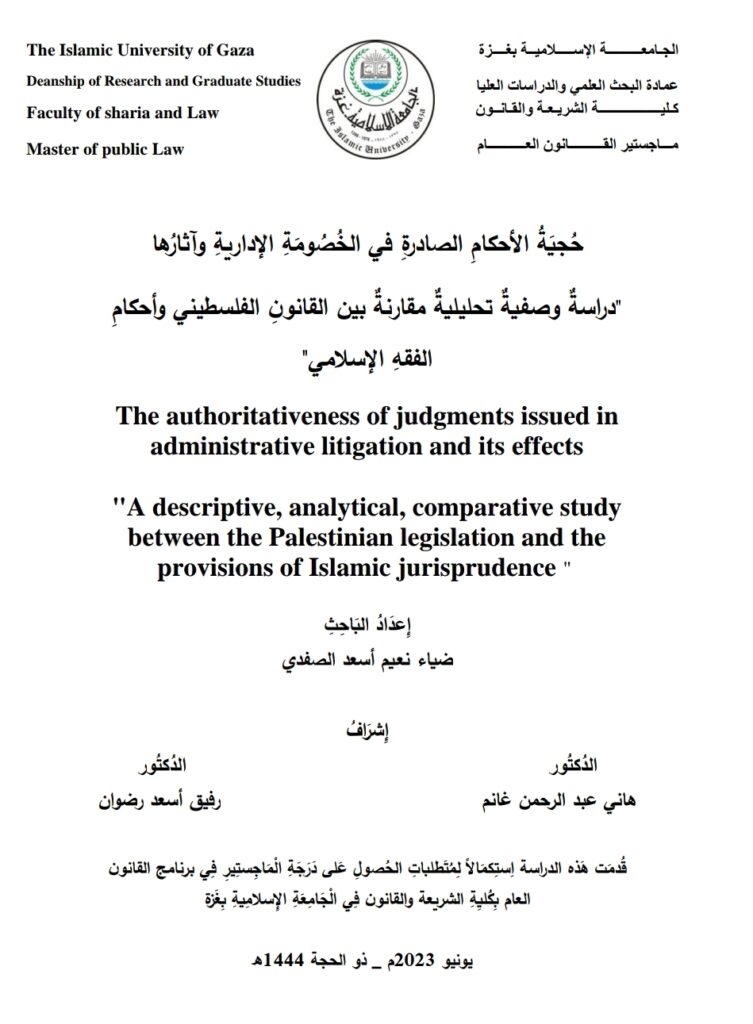
حجية الأحكام الصادرة في الخصومةَ الإداريةََ واثارها دراسة وصفية تحليلية مقارنة بين القانون الفلسطيني وأحكام الفقه الإسلامي
حجية الأحكام الصادرة في الخصومةَ الإداريةََ واثارها دراسة وصفية تحليلية مقارنة بين القانون الفلسطيني وأحكام الفقه الإسلامي
من إعداد الباحث ضياء نعيم أسعد الصفدي
ملخصَ
الرسالةَ تهدف هذه الدراسة الموسومة بعنوان: “حجيةَ الأحكامَ الصادرةَ فيَ الخصومةَ الإداريةََ وآثارها” إلى تبيان ماهية الحجية التي يتمتع بها الحكم الصادر من القضاء اإلداري المتمثل بإلغاء القرارات الإدارية ارية، وحجية الحكم الصادر بدعاوى القضاء الكامل المتمثلة بمنازعات العقود اإلدارية، والتعويض عن الق ار ارت والعقود اإلدارية، وتسوية حقوق الموظفين وغيرها، ومن ثم التعرض لألثرالمترتب على األحكام الصادرة من القضاء اإلداري في مواجهة اإلدارة، وكذلك إلقاء الضوء على المسؤولية التي تقع على عاتق اإلدارة تجاه هذا األثر. وَقدَاتبعَالباحثَفيَهذهَالدراسةَمناهجَعدة، فقد اتبع المنهج الوصفي التحليلي؛ وذلك لوصف وتحليل النصوص الناظمة لألحكام الواردة في قانون الفصل بالمنازعات اإلدارية، والق ارربقانون بشأن المحاكم اإلدارية، وكذلك اجتهاد أحكام القضاء اإلداري في فلسطين حول حجيةاألحكام الصادر في الخصومة اإلدارية وآثارها، كما و اتبع الباحث المنهج المقارن؛ وذلك لمقارنة ما اتبعناه بالوصف والتحليل مع أحكام الشريعة اإلسالمية وبعض النظم القانونية المقارنة.وقدَتوصلَالباحثَإلىَالعديدَمنَالنتائجَكانَأبرزها:َ يكتسب الحكم الصادر بإلغاء يستفيد منها الكافة وتطبق على الكافة فردا ؛ كون هذا الحكم ً القرارات اإلدارية حجية مطلقة، وإدارةخاصم الق ارر اإلداري غير المشروع لذلك فهو يبتغي مصلحة عامة، بينما الحكم الصادر برد دعوى اإللغاء شكالً أو موضوعا أما الحكم الصادر في دعاوى ً فال يكتسب إال حجية نسبية،القضاء الكامل فإن حجيتها نسبية، تقتصر على الخصوم محل أط ارف الدعوى؛ كون الهدفاألسمى ل ارفع مثل هذه الدعاوى هي ابتغاؤه مصلحة ذاتية شخصية.ومنَأبرزَتوصياتَالدراسة: أنه يتعين على المشرع الفلسطيني في ضوء الق ارر بقانونرقم )41( لسنة 2020م بش أن المحاكم اإلدارية تعديل الفقرة ) 3( من نص المادة ) 46( والتي تنص على: “تكون ألحكام المحكمة اإلدارية العليا حجة على الكافة” بأن تصبح: “تكون ألحكامالمحكمة اإلدارية العليا الصادرة بإلغاء القرارات اإلدارية حجة على الكافة” وعلة التعديل: أن الحكم الصادر بدعوى اإللغاء، هو الذي يكتسب حجية مطلقة، بينما الدعاوى األخرى ال تكتسب حجيةمطلقة والمحكمة تنظر في جميع الطعون المرفوعة من المحكمة اإلدارية من إلغاء وتعويض وعقود وتسوية وغيرها؛ لذلك يجب تخصيص دعوى اإللغاء فقط دون غيرها من الدعاوى.
Abstract
This study, entitled “The Binding Force of the Judgments Issued in Administrative Disputes and Their Effects,” aims to clarify the nature of the binding force enjoyed by judgments issued by administrative courts, specifically those that annul administrative decisions. It also examines the binding force of judgments in full jurisdiction lawsuits, which include disputes related to administrative contracts, compensation for administrative decisions and contracts, settlement of employees’ rights, and other related matters. Furthermore, the study investigates the impact of judgments issued by administrative courts on the administration and explores the responsibilities that the administration bears regarding these effects.The researcher adopted several approaches in this study. The descriptive analytical approach was employed to describe and analyze the regulatory texts concerning judgments in the law on the settlement of administrative disputes and the law on administrative courts. Additionally, the researcher examined the jurisprudence of administrative courts in Palestine regarding the authoritativeness of judgments in administrative disputes and their effects. The comparative approach was also used to compare the findings from the descriptive and analytical methods with the provisions of Islamic law and some comparative legal systems. The researcher reached several results, the most important of which were the following: the judgment that annuls administrative decisions acquires absolute binding force, benefiting everyone and is applicable to both individuals and administration. This judgment, being in opposition to an unjustified administrative decision, seeks the public interest, while the judgment that rejects a claim for annulment, whether in form or substance, only acquires a relative binding force. As for judgments in full jurisdiction lawsuits, their binding force is relative and limited to the litigants involved in the case, as the main objective of such lawsuits is to pursue personal self-interest.One of the key recommendations of the study is that the Palestinian legislator, in light of Law No. 41 of 2020 concerning administrative courts, should amend paragraph (3) of Article (46), which currently states, “Decisions of the Supreme Administrative Court shall have binding force on everyone,” to read as follows: “Decisions of the Supreme Administrative Court that annul administrative decisions shall have binding force on everyone.” The rationale behind this amendment is that the judgment issued in a claim for annulment is the one that acquires binding force, while other claims do not acquire absolute binding force, and the court looks into all appeals brought from the administrative court. Therefore, it is necessary to exclusively allocate the claim for annulment to the exclusion of other claims.